
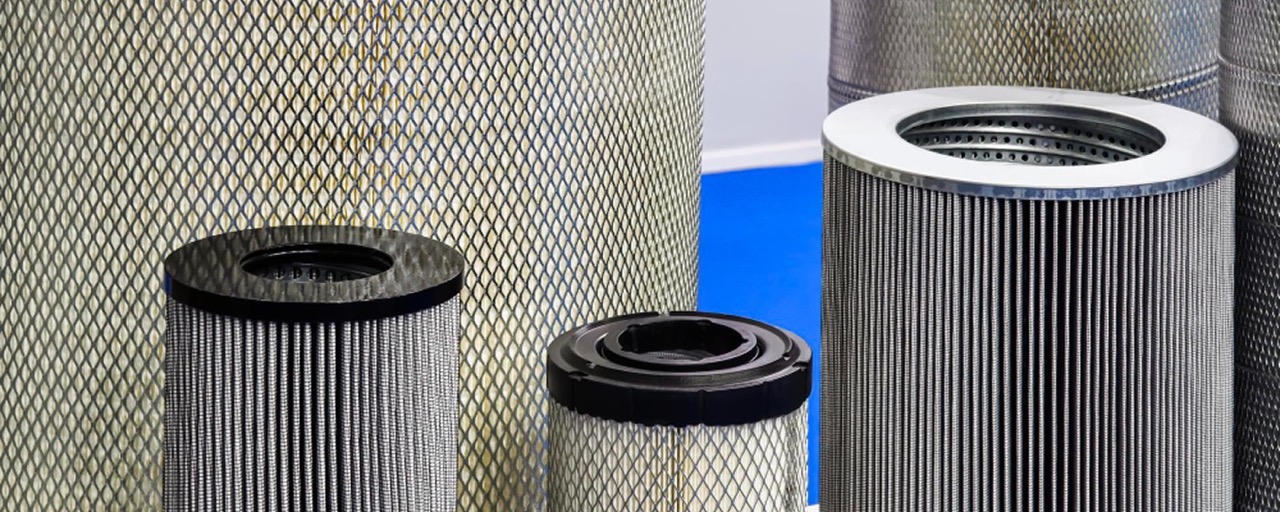
Clogged filters, unstable flow, and frequent replacements can quietly disrupt industrial systems. When filtration fails, equipment efficiency drops and maintenance costs rise. This is why many engineers turn to the sintered filter element.
Built from bonded powders that form a strong, porous structure, these filters provide precise particle control and long service life. But what makes them so reliable? In this article, we’ll explore the sintered filter working principle, how these filters are manufactured, and why they are widely trusted in modern filtration systems.
What is a Sintered Filter?
A sintered filter is a rigid filtration component made by bonding fine particles of metal, plastic, glass, or ceramic into a single porous structure. The process used to create it is called sintering, where powdered material is heated to a high temperature without fully melting. During this process, the particles fuse at their contact points, forming a strong yet porous structure.
What makes sintered porous filters unique is their network of tiny, interconnected pores. These pores allow gases or liquids to flow through the filter while trapping solid contaminants. Because the pore structure is uniform and controlled, sintered filters provide consistent filtration performance across their entire surface.
How Is a Sintered Filter Made?
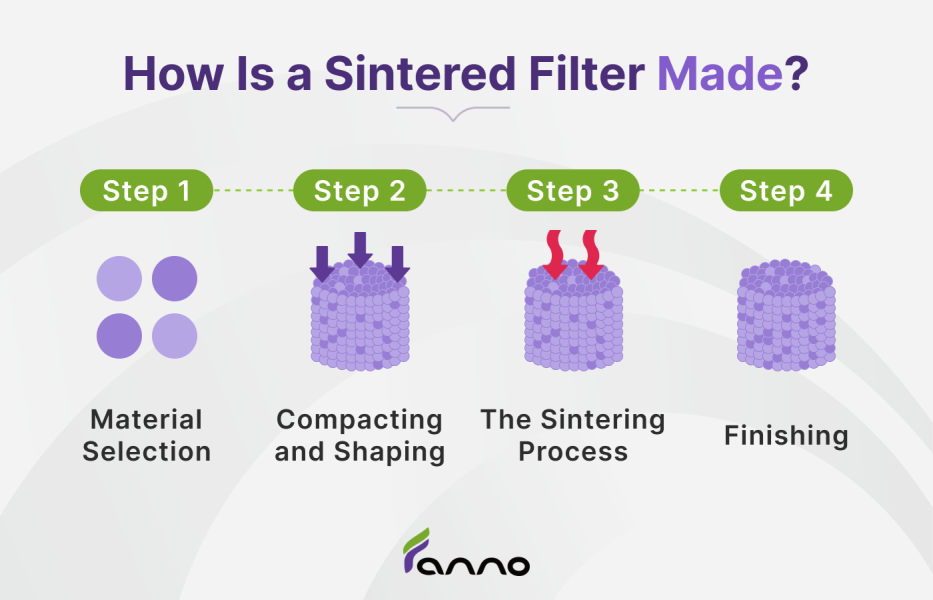
Most sintered filters are produced using a powder metallurgy process. This manufacturing method allows engineers to precisely control pore size, permeability, and structural strength. Here’s how a sintered filter is created:
Material Selection
The process begins with selecting high-purity powders, such as stainless steel, bronze, polyethylene, ceramics, or glass. The particle size of the powder directly influences the final pore size of the sintered porous filters, so manufacturers carefully control the particle distribution.
To improve consistency, the powder may be blended with small amounts of binders or additives. This ensures the mixture remains uniform during shaping and helps the material hold its form during early processing.
Compacting and Shaping
Next, the prepared powder is placed into a custom mold or die and subjected to high pressure. This step compacts the powder into a preliminary shape known as a “green compact.”
At this stage, the part already resembles the final filter but remains fragile because the particles are only held together by pressure. The green compact must be handled carefully before the bonding process begins.
For polymer materials such as polyethylene (PE), this stage is especially important because the downstream sintering process requires highly precise temperature control. The powder particles must only fuse at their surfaces, rather than fully melt, to preserve the structural rigidity of the filter while maintaining open and interconnected pore channels for effective permeability.
For applications requiring extremely large pores, manufacturers may use loose sintering. In this variation, powder is vibrated into a mold rather than compressed, allowing larger void spaces to form within the structure.
The Sintering Process
The most critical step is sintering, where the compacted filter element is heated in a controlled-atmosphere furnace. The temperature is high enough to cause the powder particles to bond together, but still below the melting point of the material.
During heating, atomic diffusion occurs between the particles, forming strong bonds while maintaining the filter’s porous structure. This carefully controlled process determines several key characteristics of the final sintered filters, including:
- Mechanical strength
- Porosity and pore size distribution
- Permeability and flow rate
- Thermal and chemical resistance
Because the particles fuse without fully melting, the filter retains its interconnected pores while becoming structurally solid.
Finishing
After the sintering and cooling stages, the filter elements undergo several finishing operations to ensure they meet precise performance and quality requirements. These post-processing steps refine the shape, surface condition, and cleanliness of the final product.
For example, machining or cutting may be performed to achieve exact dimensions or fit specific equipment designs. In cases where larger filtration units are needed, welding or assembly can combine multiple elements into a single integrated component. Some filters also receive surface finishing or polishing to improve interface smoothness and ensure proper sealing when installed in filtration systems.
Finally, the components are typically subjected to ultrasonic cleaning, which removes any residual particles or contaminants left from manufacturing. Through these finishing steps, sintered filters are prepared for reliable use in demanding filtration systems where durability, cleanliness, and consistent performance are critical.
How Does a Sintered Filter Work?
A sintered filter element works by allowing fluids or gases to pass through a network of microscopic pores while trapping solid particles. This process mainly relies on mechanical depth filtration, where the rigid porous structure captures contaminants either on the surface or within the internal pore channels. Sintered filters remove particles in a few different ways depending on particle size and contamination level.
Surface Filtration (Straining)
When particles are larger than the pore size, they are blocked at the upstream surface of the filter. Over time, these trapped particles form a thin layer known as a filter cake. Interestingly, this layer can improve filtration efficiency by capturing even smaller particles that might otherwise pass through the filter.
Depth Filtration
When the fluid contains lower concentrations of contaminants, particles can travel deeper into the filter. Inside the sintered structure, the pores form a complex, winding path known as a tortuous path. As particles move through these channels, they collide with the internal surfaces and become trapped within the filter body rather than only on its surface.
Diffusion Filtration
In gas filtration applications, extremely fine particles often move randomly rather than in straight lines. This motion increases the chance that they will collide with the internal pore walls of the sintered filter element, where they are captured and removed from the flow.
Different Types of Sintered Filter Materials
A sintered filter can be made from different materials depending on the operating environment and filtration requirements. The material used during the powder-sintering process determines important characteristics such as temperature resistance, corrosion resistance, strength, and cost.
In general, sintered filters fall into four main categories: metal, plastic, glass, and ceramic filters. Each type offers unique advantages and is suited for different industries and filtration conditions.
Metal
Sintered metal filters are the most widely used type in industrial filtration. They are valued for their high mechanical strength, durability, and ability to withstand pressure, vibration, and harsh chemicals. Common metal materials include:
- Sintered Bronze Filters: Bronze is one of the most economical metal options. It provides good corrosion resistance and thermal conductivity, making it suitable for hydraulic and pneumatic systems. However, bronze filters have moderate temperature resistance and typically operate between -50°C and 150°C.
- Sintered Stainless Steel Filters: Stainless steel, especially 304L and 316L, is the most commonly used material for sintered filters. It offers an excellent balance of strength, corrosion resistance, and cost, making it suitable for many industrial applications. Stainless steel filters can operate in temperatures up to 600°C and are widely used in chemical plants, water treatment systems, and gas filtration.
- Sintered Titanium Filters: Titanium filters are used in highly corrosive environments where durability and chemical resistance are critical. Although they are more expensive, they are valued for being lightweight, strong, and resistant to aggressive chemicals. These filters typically operate in environments below 300°C.
- Sintered Nickel and Nickel-Alloy Filters: Nickel-based filters, including alloys such as Inconel, Hastelloy, and Monel, are designed for extreme chemical and high-temperature environments. They offer exceptional corrosion resistance and are often used in marine systems, chemical processing, and high-performance industrial equipment.
Plastic (PE/PP)
Sintered plastic filters are made from polymer powders such as polyethylene (PE) or polypropylene (PP). These filters are lightweight, easy to manufacture, and cost-effective, making them a practical choice for a wide range of industrial and commercial applications. Beyond these basic advantages, plastic sintered filters also offer strong engineering flexibility. During the sintering process, polymer particles fuse to form a highly uniform and interconnected pore structure, allowing precise control over pore size, porosity, and flow characteristics.
Among these materials, PE, especially high-density and ultra-high-molecular-weight polyethylene (UHMW-PE), is widely used due to its excellent balance of performance and reliability. It provides outstanding chemical resistance against acids, bases, and many organic solvents, while maintaining structural stability over time. In addition, PE filters feature a clean, fiber-free structure that helps reduce particle shedding, making them suitable for applications where contamination control is critical. Depending on processing and surface treatment, PE filters can also be designed with hydrophilic or hydrophobic properties, enabling better compatibility with different types of fluids such as water, air, or oils.
While metal filters perform exceptionally well under extremely high temperatures, sintered PE filters are often preferred in many chemical and biotechnology processes due to their excellent chemical inertness and high purity, which help prevent liquid or gas streams from being contaminated by metal ion leaching.
Plastic filters are also valued in regulated environments. Certain grades of PE and PP are available for use in compliance with FDA food-contact requirements or other biocompatibility standards, making them suitable for medical, pharmaceutical, and biotechnology applications. Their lightweight nature, combined with the ability to mold complex shapes, allows for flexible design and easy integration into compact systems.
However, plastic filters have limited heat resistance compared to metal or ceramic alternatives and generally perform best in low- to moderate-temperature environments. Despite this limitation, they offer consistent filtration performance due to their uniform pore distribution and can achieve very fine filtration levels.
Glasses
A sintered glass filter, often called a fritted glass filter, is produced from borosilicate glass powder. These filters are commonly used in laboratory and biomedical environments where purity and chemical stability are essential.
Glass filters are easy to clean and do not release fibers into the filtered fluid, which helps maintain high purity levels. They also provide excellent chemical resistance. However, they are brittle and sensitive to mechanical shock, and their typical operating temperature is below 100°C.
Ceramic
Sintered ceramic filters are designed for extremely high-temperature environments. Depending on the ceramic material used, they can withstand temperatures ranging from 800°C to over 1000°C.
These filters are often used in molten metal filtration, high-temperature gas filtration, and industrial air purification systems. Ceramic filters offer strong chemical resistance and stability under extreme heat. However, like glass, they can be brittle and more expensive than plastic or bronze alternatives.
| Material Type | Relative Cost | Max Temperature | Corrosion Resistance | Key Characteristics |
| Sintered Bronze | Low | ~150°C | Good | Cost-effective; used in pneumatics and hydraulics |
| Sintered Stainless Steel | Moderate | ~600°C | Excellent | Strong, durable, and widely used in industry |
| Sintered Titanium | Very High | ~300°C | Superior | Lightweight and highly chemical-resistant |
| Sintered Nickel Alloys | Premium | Up to ~1000°C | Exceptional | Suitable for extreme chemical environments |
| Sintered Plastic | Very Low | ~80–150°C | Very Good | Lightweight and economical |
| Sintered Glass | Low–Moderate | ~100°C | Excellent | High purity; commonly used in laboratories |
| Sintered Ceramic | High | ~800–1000°C | Excellent | Designed for extreme heat applications |
Why Should You Use Sintered Filters?
Compared with disposable cartridges or woven mesh filters, a sintered filter provides more stable performance and can operate reliably under harsh conditions such as high pressure, extreme temperatures, or aggressive chemicals.
High Durability and Environmental Resistance
One of the main reasons industries choose a sintered filter is its exceptional durability. Because the filter is formed by bonding powdered materials into a solid porous structure, it is much stronger than many traditional filtration media, such as paper, cloth, or woven mesh. This rigid structure allows the filter to withstand high pressure, strong vibration, and mechanical stress without tearing or collapsing.
Another major advantage is its thermal stability. Depending on the material used, sintered filters can operate in extremely hot or cold environments, with some metal or ceramic filters handling temperatures ranging from cryogenic conditions to nearly 1000°C.
In addition, many sintered materials naturally resist corrosion. By selecting specialized alloys such as stainless steel and titanium, sintered filters can perform reliably even in highly acidic, alkaline, or chemically aggressive environments where conventional filters would quickly degrade.
Accurate and Consistent Filtration
A key benefit of the sintered filter is the ability to provide precise and repeatable filtration performance. During manufacturing, the particle size of the base powder and the sintering conditions are carefully controlled. This creates a uniform network of interconnected pores throughout the filter element.
Because the pore structure is consistent, the filter can deliver stable filtration accuracy across its entire surface area. Most sintered metal filters provide filtration ratings between 0.1 and 100 microns, making them suitable for a wide range of industrial applications.
Another advantage is that sintered filters do not release fibers or particles into the filtered fluid. Unlike paper or fabric filters, the bonded structure of a sintered filter element ensures the filtration media remains intact, helping maintain high product purity.
Reusable and Easy to Clean
Another major advantage of sintered filters is their reusability. Instead of being discarded after clogging, a sintered filter element can be cleaned and reused multiple times. This significantly lowers long-term operating costs compared with disposable filters.
Many systems use clean-in-place (CIP) methods, where reverse flow or backwashing removes the accumulated layer of particles from the filter surface. If contaminants become trapped deeper within the pore structure, more intensive cleaning methods can be used.
These may include ultrasonic cleaning, which uses vibration to dislodge trapped particles, chemical cleaning to dissolve deposits, or thermal treatment that burns away organic contaminants. With proper maintenance and regular cleaning, sintered filters can often remain in service for a very long lifespan, making them a durable and cost-effective filtration solution.
Flexible Shapes and Versatile Applications
Sintered filters are also valued for their design flexibility and versatility. Because the filter is formed during the powder compaction process, manufacturers can create a wide variety of shapes and sizes to match specific equipment designs. Common configurations include discs, plates, tubes, cartridges, cylinders, and cones, allowing the filter to integrate easily into different filtration systems.
The size range is also impressive. Some sintered filters are extremely small, about the size of a pinhead, while larger units can be designed for industrial systems comparable in size to a 55-gallon drum. Beyond filtration, the controlled porosity of sintered materials allows them to serve additional functions.
For example, they can act as pneumatic silencers that reduce noise in compressed air systems, spargers that create fine bubbles to introduce gases into liquids, or flame arrestors that help prevent explosions in hazardous environments.
Common Applications of Sintered Filters
Because of their durability and controlled pore structure, sintered filters are used in many industries where reliable filtration is critical. Beyond simple particle removal, these filters can also perform specialized roles like gas diffusion, noise reduction, and equipment protection.
Chemical and Petrochemical Industry
The chemical and petrochemical sector is one of the largest users of sintered filters. In these industries, filtration systems must handle aggressive chemicals, high temperatures, and continuous production processes. Sintered filters are commonly used for catalyst recovery, allowing valuable metals such as platinum or palladium to be collected and reused during chemical reactions.
They are also used for polymer filtration, removing impurities during plastic production, and for purifying process liquids used in manufacturing. In oil refining and petroleum transport systems, sintered filters help remove catalyst fines and other contaminants from slurry oil and crude oil streams, protecting downstream equipment.
Food and Beverage Industry
In the food and beverage industry, sintered filters help maintain product quality and safety. They are used to remove suspended solids, pulp, and other particles to improve the clarity of beverages such as juices, beer, and soft drinks. Also, they are often used for gas diffusion processes, such as introducing carbon dioxide into beer or soda during carbonation.
Sintered filters can also help extend the shelf life of products by removing unwanted gases like oxygen from cooking oils or beverage containers. Because they do not release fibers and can be manufactured in food-contact or pharmaceutical-grade material options, they are well-suited for hygienic processing environments.
PE sintered filters are especially common in these applications because porous polyethylene offers strong chemical compatibility, a uniform porous structure, and material options designed to meet FDA food-contact or USP Class VI requirements in relevant product lines.
In laboratory and high-purity environments, PE sintered filters are also widely used for liquid and gas handling because their chemically inert porous structure helps reduce unwanted interactions with samples, while the sintering process bonds the polymer particles directly into a porous matrix rather than relying on a separate binder layer. This makes them a practical choice for applications where sample purity, process cleanliness, and consistent filtration performance are critical.
Pharmaceutical and Medical Applications
Sintered filters play an important role in pharmaceutical and medical applications where purity is essential. They are often used in sterile filtration processes to remove microorganisms and fine particles from liquids and gases before packaging. This helps ensure that pharmaceutical products meet strict safety standards.
In medical equipment, sintered filters can be found in respiratory devices, gas delivery systems, and certain implantable drug delivery technologies. Their stable pore structure and resistance to contamination make them ideal for maintaining high levels of product purity.
Automotive and Transportation Industry
The automotive and transportation sector also uses sintered filters in several ways. In vehicle exhaust systems, sintered materials can function as mufflers or silencers, reducing noise generated by escaping gases. They may also act as filtration components that help capture pollutants before they enter the environment.
In electric motors and other vehicle components, small sintered bronze filters are often used in ventilation ports. These filters allow airflow while blocking dust, moisture, and debris, helping protect sensitive internal components.
Aerospace and Defense
In aerospace and defense applications, filtration components must meet extremely strict performance standards. Sintered filters, especially those made from titanium or specialized alloys, provide a strong strength-to-weight ratio, making them suitable for aircraft and spacecraft systems.
They are used in fuel filtration systems, hydraulic systems, and environmental control units within aircraft. In advanced aerospace technologies and defense equipment, these filters help ensure reliable performance in demanding operating conditions.
Other Specialized Functional Uses
In addition to traditional filtration, the controlled porosity of sintered materials allows them to perform several specialized functions.
- Pneumatic Silencing: Sintered filters can reduce noise in compressed air systems by dispersing exhaust gas across a larger surface area. This breaks up turbulent airflow and significantly lowers sound levels in industrial equipment.
- Gas Diffusion: When used as diffusion stones or spargers, sintered filters create very fine and uniform bubbles. This makes them useful in applications such as aeration systems, beverage carbonation, and oxygen delivery in water treatment or aquaculture systems.
- Breather Vents: Sintered filters can also serve as breather vents in sealed enclosures like gearboxes or electronic housings. These vents allow pressure equalization while preventing dust, moisture, and other contaminants from entering the system.
- Flow Restrictors: In precision industries such as healthcare or electronics manufacturing, sintered filters can regulate the flow of gases. Their controlled pore structure allows for accurate and stable flow control.
- Flame Arrestors: In hazardous environments, sintered filters can act as flame arrestors, stopping flames from traveling through gas streams. This helps prevent explosions in industries dealing with flammable gases or vapors.
What to Consider When Choosing Sintered Filters
Choosing the right sintered filter depends on several technical factors. Since these filters are used in demanding environments, the material, pore structure, and design must match the operating conditions of your system. Considering the following factors will help ensure the filter delivers reliable performance, long service life, and proper filtration efficiency.
Filtration Rating and Pore Size
The first thing to consider is the filtration rating, which determines the size of particles the filter can capture. Sintered filters are available in a wide range of pore sizes, typically from 0.1 to 100 microns, depending on the material and manufacturing process.
Filters are often categorized into media grades based on their average pore size. In some industries, filtration ratings are defined using testing standards such as ASTM E128, which measures pore size and permeability.
It is also important to understand the difference between absolute and nominal filtration ratings. An absolute rating means the filter can block about 99% of particles above a specific size, while a nominal rating allows a slightly higher percentage of particles to pass. Selecting the correct pore size ensures efficient filtration without causing excessive flow resistance.
Operating Temperature
Temperature is another critical factor when selecting a sintered filter. If the operating temperature exceeds the material’s tolerance, the filter structure may weaken, or its pore size may change, affecting filtration performance. On the other hand, extremely low temperatures can make some materials brittle.
Different materials offer different temperature limits, as we have mentioned. Plastic sintered filters typically operate between -20°C and 80°C, while bronze filters can handle around 150°C. Stainless steel sintered filters can withstand temperatures up to 600°C, and ceramic filters may tolerate temperatures as high as 800°C to 1000°C. Choosing the correct material ensures the filter remains stable under operating conditions.
Chemical Compatibility
The chemical composition of the fluid being filtered is also an important consideration. The filter material must be chemically compatible with the process fluid to prevent corrosion or contamination.
For example, stainless steel filters provide strong corrosion resistance and are commonly used in general industrial applications. In more aggressive chemical environments, nickel-based alloys such as Inconel or Hastelloy may be required. Titanium filters are often selected for highly corrosive or high-purity applications because of their excellent resistance to chemicals.
Flow Rate and Pressure Drop
The relationship between flow rate and pressure drop plays an important role in filtration system design. When fluid passes through a filter, resistance occurs as particles accumulate on the surface and within the pores. This resistance causes a pressure drop across the filter.
When selecting a sintered filter element, it is important to determine the maximum pressure drop your system can tolerate while maintaining the desired flow rate. Factors such as fluid viscosity, temperature, and contamination levels will also influence filtration performance. Once pressure reaches a certain level, the filter typically needs cleaning to restore normal flow.
FAQs
What is the main advantage of a sintered filter?
The main advantage of a sintered filter is its combination of durability and precise filtration. A sintered filter element has a rigid porous structure that can withstand high pressure, temperature, and chemical exposure while maintaining a consistent pore size. This allows reliable particle removal and long service life in demanding industrial filtration environments.
What materials are commonly used to make sintered filters?
Sintered filters are typically made from materials such as stainless steel, bronze, titanium, nickel alloys, polyethylene (PE), polypropylene (PP), glass, and ceramic powders. Each material offers different benefits, including corrosion resistance, heat tolerance, strength, or lightweight properties, allowing sintered filters to be tailored for various industrial, laboratory, or chemical applications.
Can sintered filters be cleaned and reused?
Yes, sintered filters are designed to be cleaned and reused multiple times. Because the filter media is rigid and durable, trapped particles can be removed through backwashing, ultrasonic cleaning, chemical solvents, or thermal treatment. With proper maintenance, a sintered filter element can remain effective for several years in industrial filtration systems.
When do sintered filters need cleaning?
Sintered filters need cleaning when accumulated particles form a thick filter cake that increases flow resistance and causes a noticeable pressure drop. Once the pressure differential reaches the system’s preset limit, cleaning is required to restore airflow, maintain filtration efficiency, and prevent excessive strain on the filtration system.
What industries commonly use sintered filters?
Sintered filters are commonly used in the chemical and petrochemical, food and beverage, pharmaceutical, automotive, aerospace, and water treatment industries. They are valued for their durability, precise filtration, and ability to operate under high temperatures, pressure, and corrosive environments. These filters also support applications like gas diffusion, equipment protection, and emission control.
Is a polyethylene (PE) sintered filter suitable for chemical processing?
Yes. PE sintered filters offer excellent chemical resistance and high material purity, making them a dependable solution for pharmaceutical, laboratory, and food-grade applications. Their inert structure helps minimize interactions with sensitive substances, while their clean, fiber-free matrix reduces the risk of particle shedding. This makes them especially suitable for processes where strict contamination control, product integrity, and consistent filtration performance are essential.
Take Your Filtration Performance to the Next Level with Fanno’s Sintered Filters
After exploring the structure, materials, filtration ratings, and performance advantages of sintered filters, it becomes clear why they are widely trusted in demanding filtration environments. Their rigid porous structure, stable pore distribution, and long-term durability make them an excellent solution for applications that require reliable and consistent filtration.
When you are ready to enhance your filtration system, Fanno stands out as a dependable sintered filter manufacturer committed to precision engineering and consistent quality. Our sinter plates are made with a Polyethylene (PE) matrix, forming a uniform porous structure that provides stable filtration accuracy, strong chemical resistance, and reliable flow performance. The PE-based design also delivers lightweight durability and extended service life across air, liquid, and gas filtration applications.
Contact Fanno today to discuss your requirements and find the ideal sintered filter solution for your system.